
Permits and documentation support
Demolition often involves City of New Orleans permit steps and inspections. We help assemble the information needed and keep the scope aligned with what is approved.
Serving New Orleans, Louisiana & surrounding areas
Mon–Fri 8am–6pm · Sat 9am–2pm
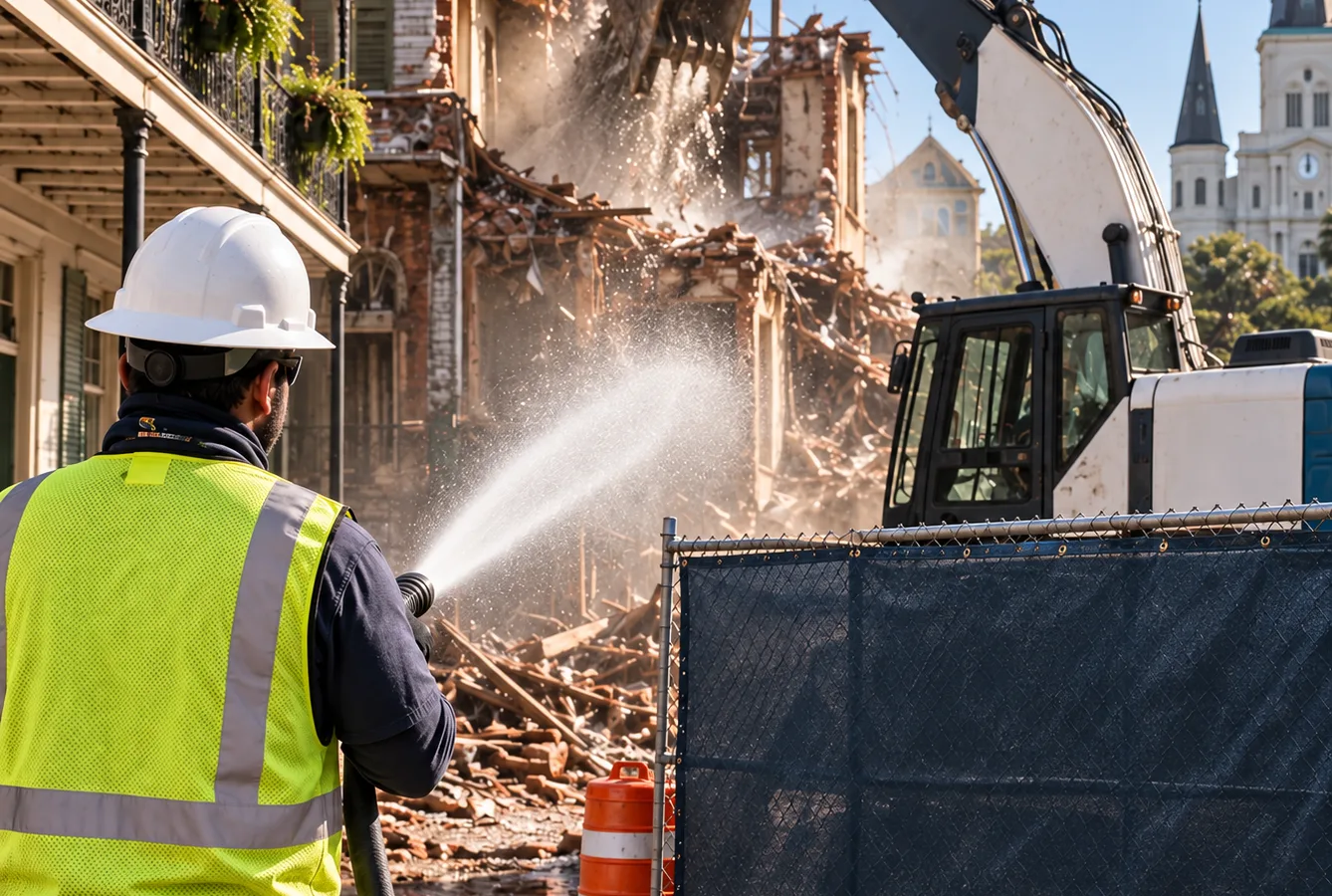
Building demolition · New Orleans
Get a clear scope, a safe plan, and a clean site. Licensed crews handle permits, utilities coordination, controlled teardown, hauling, and final cleanup for residential and commercial properties.
Plan the entire removal
Building demolition in New Orleans is more than knocking a structure down. A proper job starts with planning and ends with a site that is safe, compliant, and ready for what comes next.
Most projects include:
Because many New Orleans properties sit close to neighbors, demolition plans often need extra attention around setback lines, fencing, overhead lines, and street access. The goal is simple: a safe removal with predictable steps and a clean finish.
Full-structure removal
Our team at demolition new orleans handles full-structure removal for houses, multi-unit buildings, small commercial buildings, and detached structures that are beyond repair.
For residential jobs, the most common concerns are protecting nearby homes, limiting dust, and keeping access open for neighbors and deliveries. In neighborhoods with tighter lots like the Bywater and Marigny, controlled sequencing and debris staging matter as much as the machine work.
For commercial sites, the focus is usually on schedule, traffic control, and coordination with property managers and adjacent tenants. In the Central Business District, access constraints and pedestrian safety can drive the plan and the equipment choice.
When a property has mixed materials or prior alterations, we plan for what we can see and what we cannot. That includes checking for slab thickness changes, hidden additions, and places where hand work is safer before the main demolition starts.
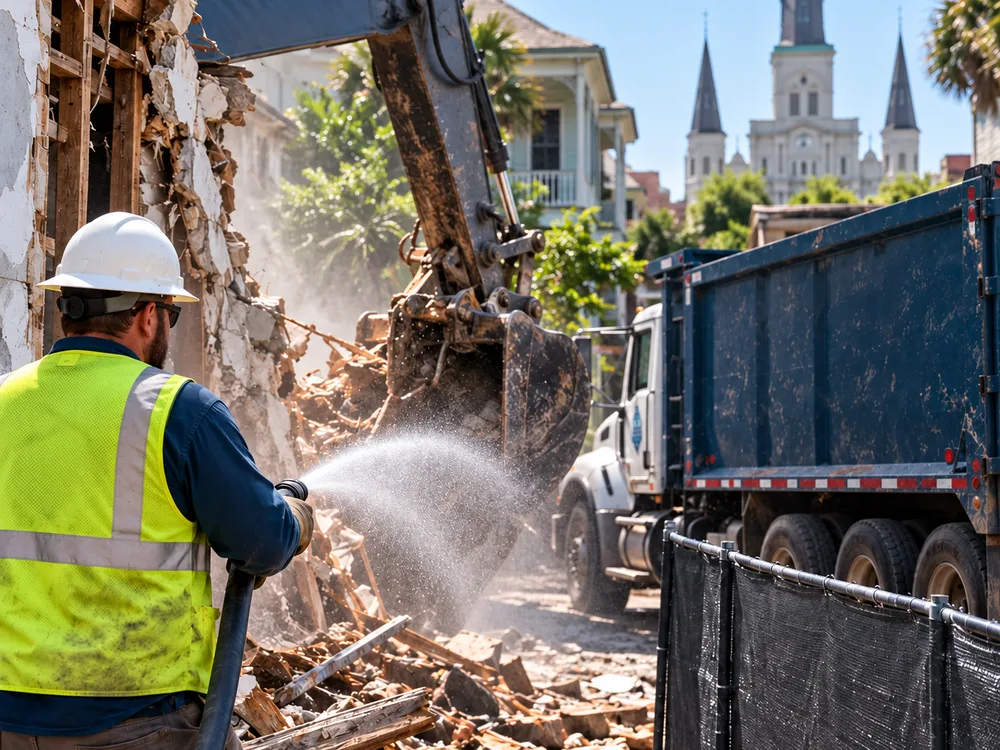
One coordinated scope
Demolition often involves City of New Orleans permit steps and inspections. We help assemble the information needed and keep the scope aligned with what is approved.
We coordinate around disconnect confirmations so demolition does not begin with live services still in place.
Tighter properties call for more control: fence placement, equipment positioning, debris staging, and sequencing to protect nearby structures and sidewalks.
Water suppression, proper loading practices, and cleanup standards reduce dust and keep debris contained to the work area.
You get one scope for teardown, debris loading, hauling, and disposal, rather than juggling multiple vendors.
Inspection to clean site
We walk the property, confirm access, identify what stays, and note constraints like nearby buildings, fencing needs, and any overhead lines.
We align the plan with local requirements and coordinate around utility disconnects. This step prevents delays and reduces risk once equipment arrives.
We establish controlled access, staging areas, and protective measures. When street space is limited, setup can include traffic-control planning and delivery timing.
If hand removal is safer for certain areas, we do that first, then proceed with mechanical demolition using the right attachments and sequence.
Debris is loaded out, recyclable scrap is separated when practical, and the site is cleaned to the agreed standard so the next phase can start.
Project pricing
Building demolition in New Orleans typically runs about $8,000 to $30,000+ for a full residential structure, while larger commercial demolitions can be $40,000 to $200,000+ depending on size and complexity. Small structures and partial teardowns are often less.
Your price changes most with building size, construction type such as wood versus masonry, accessibility for machines and trucks, distance to haul and disposal, permit requirements, and how much slab, foundation, or site grading is included. The exact cost is confirmed after a site visit and a written scope.
Controlled removal and cleanup
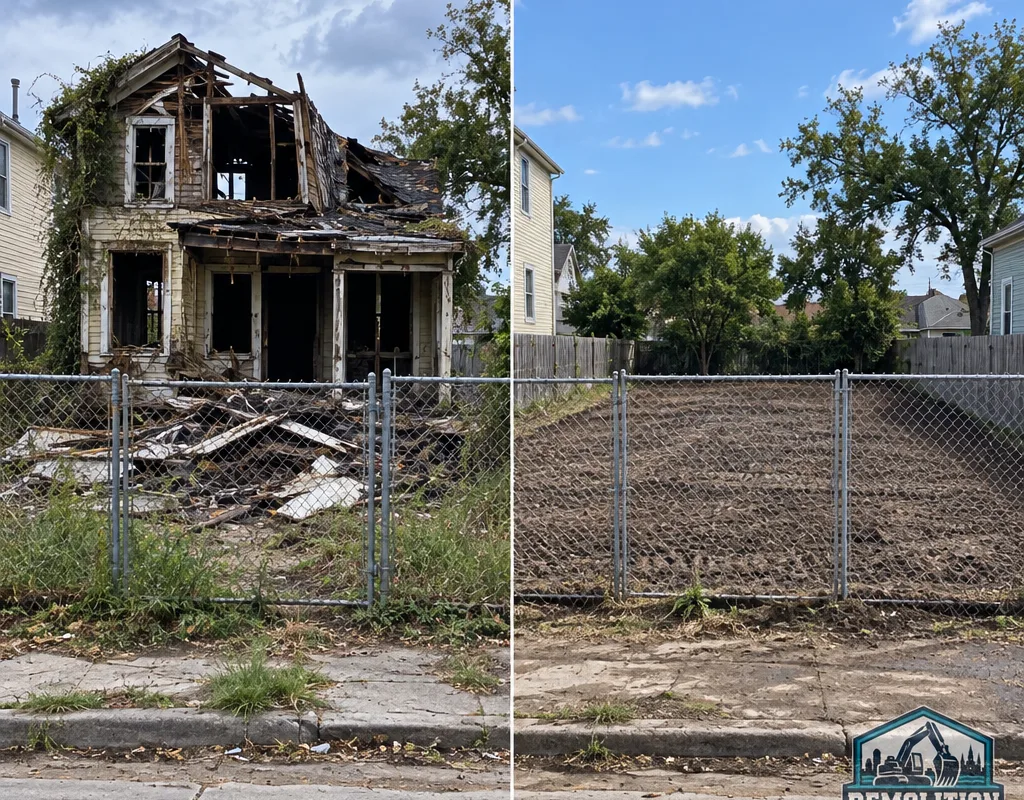
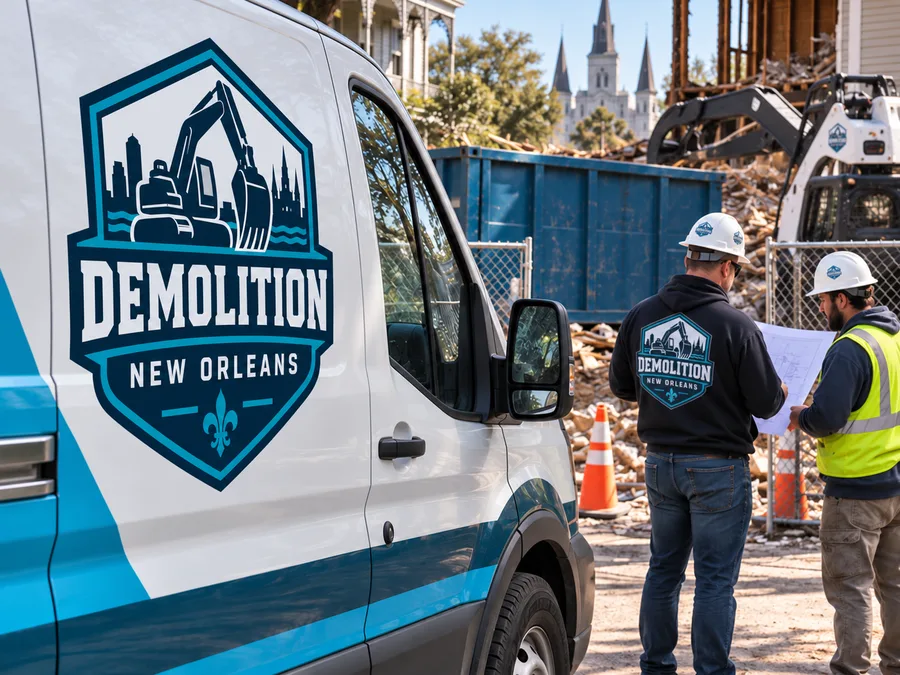
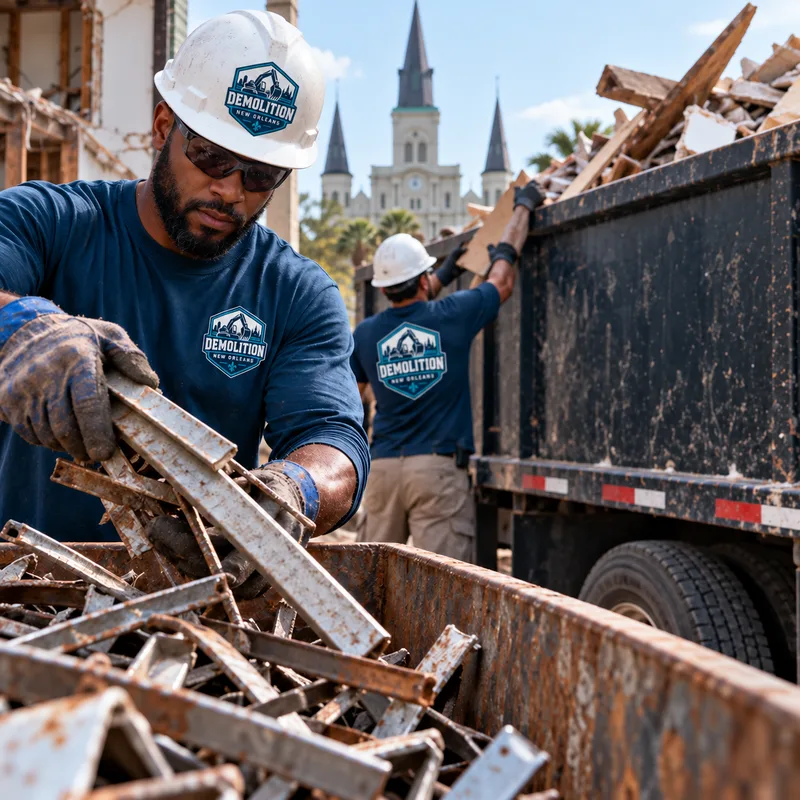
If you are planning new construction or need to remove an unsafe structure, start with a site visit and a written demolition scope so permit steps, utilities, and cleanup are accounted for up front. You can also learn more about our broader New Orleans demolition services and what we handle day to day.
Practical answers
Many full building removals require a City of New Orleans demolition permit, and the rules can vary by property and structure type. The safest approach is to confirm permit needs before scheduling equipment, because utility disconnects, inspections, and documentation can affect the timeline.
A straightforward residential teardown is often completed in 1 to 3 working days once utilities are confirmed and the site is ready, but access constraints and hauling logistics can extend that. The longer part is frequently the front-end coordination: permits, disconnects, and scheduling trucks.
Yes, but tight lots change the plan. We look closely at machine access, where debris can be staged, how to protect adjacent structures, and whether some selective demolition should happen before mechanical teardown.
Cleanup typically includes loading all demolition debris, hauling it off site, and leaving the lot cleared to the agreed scope. If you want slab removal, foundation removal, or rough grading, that should be written into the scope because it changes equipment and disposal.
If asbestos-containing materials are suspected or documented, demolition needs to follow the required inspection and abatement steps before the main teardown. We can coordinate the schedule around proper abatement so the demolition phase starts only after the site is cleared for that work.
A controlled demolition plan is built to prevent that: we manage fencing, sequencing, equipment positioning, and debris loading so impact stays within the work zone. During the site visit, we identify the specific risks created by property lines, shared fences, and nearby structures, then plan around them.
Tell us what you need demolished and what the end condition should be. We will confirm access, utilities, permit steps, and hauling, then provide a written scope and schedule for your New Orleans property.